

Why The Ukraine War May Never End
The fighting could just change forms

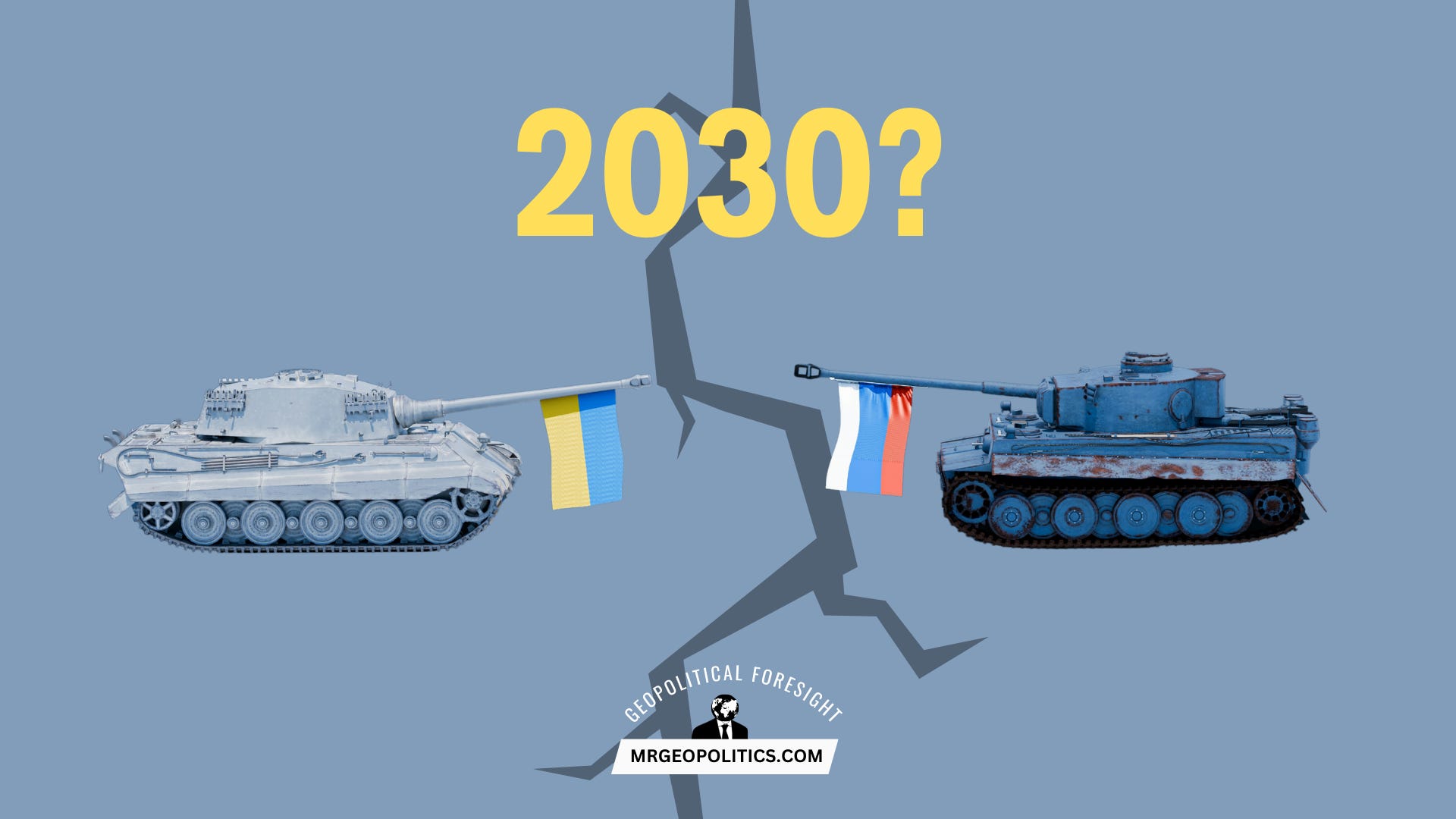
For the past three weeks, diplomacy has been in overdrive to end the worst conflict in Europe since WWII. An endless barrage of ideas (and threats) has surfaced: Kyiv holding a referendum on whether to give up the occupied territories, the Kremlin warning that it is ready for war if Europe wants it, and the US warming to the idea of security guarantees for Ukraine post-war - an idea that was once pushed aside in Washington.
This is not just another shot at diplomacy. In many ways, this is the last real push to end the war.
If Ukraine and Russia cannot find a way to pause the fighting now, if diplomacy does not prevail, the door is open to the situation dramatically worsening in the coming weeks and months. And, America potentially withdrawing more of its support and engagement.

Of course, there is a clear knock-on effect for America.
As the US-brokered Cambodia-Thailand ceasefire falls apart, and as Venezuela’s President Nicolas Maduro rejects America’s calls to leave office, if the US also cannot halt the fighting in Europe after this much engagement and pressure, US leadership will be questioned.
Grey War
However, lost in these geopolitical rabbit holes, an important conversation is not being had. What if the Ukraine war never actually ends?
This is not to propose that Ukraine will become another “forever conflict” like Iraq or Afghanistan. In fact, in this war of attrition, where Russia now controls one-fifth of Ukraine, and according to Western intelligence estimates, the Russian military is now bigger than it was pre-Ukraine, if the war drags on, Russian forces will continue to seize more and more territory. Even if the timeline changes again, Russia has the military capacity to sustain the fighting. According to NATO, in just three months, Russia produced more ammunition than all of NATO produced in a single year, signaling how vast Russia’s war supplies are.
Instead, the idea of the Ukraine war never ending centers on what happens the day after the fighting stops?
The obvious response is “rebuilding.” And, by all means, this will begin.
But what is also likely to start is that the current theatres of war, particularly in eastern Ukraine (occupied territories), will move into a grey zone. The frontlines may be quieter, but they will not be silent.
New Drone War
Ukraine has developed arguably the most advanced drone industry, from design to production to deployment, in the entire world. No other nation has Ukraine’s level of experience in drone warfare.
Nothing is stopping Kyiv from doing to Russia what Russia did to Ukraine in 2014, when fighting erupted in the Donbas as Russian-backed forces advanced. Now, it may be Ukrainian-backed forces, armed with sophisticated drones, prodding formerly Ukrainian territories or Russia proper. It is also possible that Kyiv will use drones to push back against Russia’s push to commercialize Ukrainian territory and export materials and resources to the world.
On the other side, nothing is stopping Russia from continuing to bleed Ukraine with drones, separatism, and industrial sabotage. In 2024, the largest mall in Warsaw (Poland) was set ablaze, an incident that the Polish government has placed at the feet of Russia. This could be replicated across Ukrainian cities, putting everything from shopping centers to hospitals, in the crosshairs under the cover of ceasefire or the end of fighting.
Wrong Outlook
Regardless of what tactics each side adopts, and no matter how militarized the front lines become, full of soldiers, tanks, missiles, and mines, a different kind of war could begin the day the current war ends (or freezes). Many are expecting the Ukraine war to follow the trajectory of WWII, where warring sides moved beyond the fighting. But what is more likely is some kind of situation that mimics the state of play between North Korea-South Korea, Serbia-Kosovo, and Armenia-Azerbaijan, where peace increasingly gives way to fighting.
Equally important in the post-war conversation is the US or Western security guarantees for Ukraine. How far do they go? Do they just cover a future Russian invasion of the country? Or do they also cover Russian aggression in general? Are these guarantees under the control of the West, or can Kyiv invoke them, similar to how NATO states have invoked Article 4 in recent months?
The wording is important if one is to believe the war may not end, it will just change forms. Understanding how and why Ukraine could invoke its security guarantees is central to the post-war conversation. If the guarantees are too extreme, Russia may refuse the peace deal. If Russia agrees, and Kyiv invokes at a later date, it would mean America must intervene and defend Kyiv against Russia, putting the US and Russia directly against one another. This has not even happened in this war. Without careful planning, a peace deal could set the stage for an unthinkable situation in the future.
Uncertain Future
There is enough analysis of why the peace talks might fail or why Russia is getting everything it wants. Part of this is geopolitics, often ruthless. Part of this is the nature of war, where one side always comes out stronger than the other. Yet, lost in these conversations is what the future looks like in the new era of warfare and geopolitics.
The tensions that sparked the conflict may not disappear. The methods to fight the war may grow more sophisticated. And while the formal door to fighting may be shut, other doors could quickly swing open.
Put simply, the Ukraine-Russia war is far from settled. A ceasefire or cessation of hostilities will only change how the conflict is fought, not whether or not it ends. This is the real shadow over peace talks. This is what everybody should keep on the radar even if the current fighting stops.
ABISHUR PRAKASH AKA. MR. GEOPOLITICS

Mr. Geopolitics is the property of Abishur Prakash/The Geopolitical Business, Inc., and is protected under Canadian Copyright Law. This includes, but is not limited to: ideas, perspectives, expressions, concepts, etc. Any use of the insights, including sharing or interpretation, partly or wholly, requires explicit written permission.