

Weaponizing Geography
When asymmetric warfare changes everything

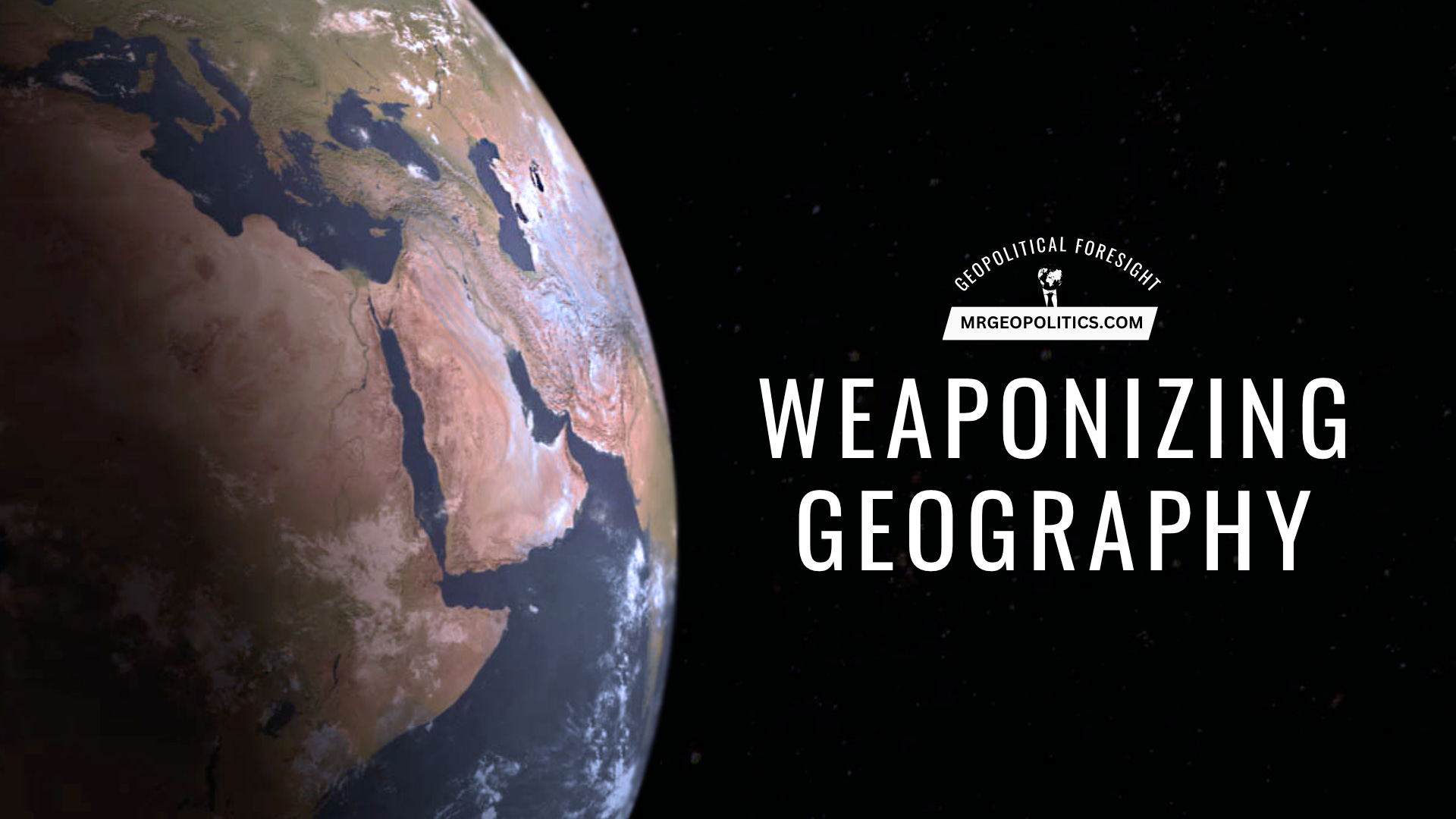
Abishur’s key message: Iran has challenged the dollar on a scale that even China has not, “weaponizing geography” to induce a new financial order.
The Iran war is in limbo. Not for Iran, but for the US. After more than three weeks of fighting and turmoil across the Middle East, extending into the Indian Ocean (Diego Garcia), US President Donald Trump issued a 48-hour ultimatum on Saturday (March 22) for Iran to reopen the Strait of Hormuz or America will destroy the nation’s power plants. It was a double threat: destroy critical energy infrastructure, and throw the nation into social and economic chaos.
However, just before the 48-hour deadline struck, Trump unveiled that he had held “very good” talks with Iran on ending the war, and was giving Iran another five days to reopen Hormuz. Equally important, the US is negotiating with Iran’s parliamentary speaker, Mohammad Bagher Ghalibaf, not the new Ayatollah, who may or may not be alive. Remember, this is the same Ghalibaf that threatened “irreversible strikes” on Gulf infrastructure if the US attacks Iranian power plants. Previously, Ghalibaf also labeled holders of US Treasury bonds as legitimate targets.
Here is where things become “muddy.” Trump is holding talks on ending the war with the same leadership he previously called on people to revolt against. Almost one month into the biggest war in the region since 2003, and nothing has changed. The Iranian regime remains intact, the military has not turned on the government, the people are not revolting, Iran is not isolated, and Tehran has completely redefined asymmetric warfare through low-cost drones, foreign intelligence, and surgical strikes on Gulf states - the brunt of which has been absorbed by the UAE.
What the US and Israel expected would happen on February 28 has not materialized. Now, as the global economy flashes red, and the appetite for war drops, Washington needs an off-ramp. Suddenly, it is the US that needs this conflict to end. But Iran’s resolve to keep fighting has not been broken. Adding to the uncertainty of what happens next is the Pentagon’s request for $200 billion in additional funding for the Iran conflict, which may signal that US military planners are unsure how long the diplomatic path can actually hold.
In all of this, a geopolitical message is being sent to the world: the most powerful nation has failed in toppling one of the most sanctioned regimes in all history through military force.
And, Iran did not do anything “surprising.” The same maneuvers that the US has had decades to prepare for like Iran cordoning off the Strait of Hormuz or striking nations that aid America, are exactly the cards Tehran played. And they worked. Nothing out of the ordinary has happened. How is this the outcome of 20+ years of geostrategic planning around a conflict with Iran?
Regardless of what the US says, the interpretation of the world is that US hard power has clear limits. It worked in Venezuela. It will likely work in Cuba. But not with semi-powerful states like Iran. And definitely not with the likes of China or Russia.
If there was every a moment when the Moscow-Beijing-Pyongyang axis felt emboldened, and strong enough to take on the West, it is right now.
The other message is that major geoeconomic upheaval has begun.
Not only did Iran squeeze Hormuz, it went one step further, proposing that trade vessels that traverse the chokepoint settle their accounts in Yuan, not USD. In tandem, the vessels that Iran gave safe passage to were overwhelmingly BRICS (i.e., China, India, Malaysia) or China-centric (Pakistan). Put differently, those aligned with America were in the cold. This is the West’s game turned against the West, where Western capitals have used geopolitical alignment to guide economic dealmaking. Now, Iran, flanked by China and Russia, used the same playbook.
Surrounding all this, the West is broken. For the first time in modern history, Western allies have refused to come to America’s aid as US soldiers perish and missiles fly. The most sacrosanct commitment between Western allies has been broken. It is no longer speculation to say that NATO could very well be on its last legs. After all, if Europe (and Asia) did not show up to defend the US, why would America show up to defend Europe (or Asia)? This is no longer a “what if” scenario. This is exactly what has occurred - and is now looming.
Contrary to what many have said, there are two wars with Iran.
The first is the military campaign led by the US and Israel. The US wants to end this, sooner rather than later. However, the Israeli and Iranian variables remain grey. For Tel Aviv, giving the Iranian regime breathing space may be unacceptable. And for Iran, even if the US-Israeli strikes stop, there is nothing stopping it from launching drone strikes across the Middle East indefinitely, turning a shadow-war-turned public-war back into a shadow war through drone warfare.
The second front, however, is everything else. Even if the military fighting stops, the economic battlefield has only just begun.
Iran has challenged the dollar on a scale that even China has not, weaponizing geography to enact a new financial order.
Not only has the Yuan been provided with a historic geopolitical opening, but the BRICS group, on shaky ground before the Iran war began, has been given new life. And, surrounding all this, Western economic security is in the air as a growing number of LNG tankers make a U-turn mid-Atlantic, diverting their supplies from Europe to Asia.
Many have been trying to decipher the “endgame” of the Iran war. Strangely, the endgame is a return to the pregame but on steroids: the Iranian regime remains in power, but fights a new kind of war with energy, currency, blocs, and geography.
The dawn of new geopolitics corresponds with the dawn of unorthodox behavior. Geography is being weaponized (again). What has begun in the Middle East will not remain limited to the region. Across the globe, everybody is observing and learning. The lesson they are being taught is that superpowers have limits, and that even in the 21st century, the creative use of land and resources can change the course of war.
-Abishur Prakash aka “Mr. Geopolitics”

Mr. Geopolitics is the property of Abishur Prakash/The Geopolitical Business, Inc., and is protected under Canadian Copyright Law. This includes, but is not limited to: ideas, perspectives, expressions, concepts, etc. Any use of the insights, including sharing or interpretation, partly or wholly, requires explicit written permission.