

Top 5 Geopolitical Shockwaves of an Iranian Revolution
From a new oil war to an American pullback

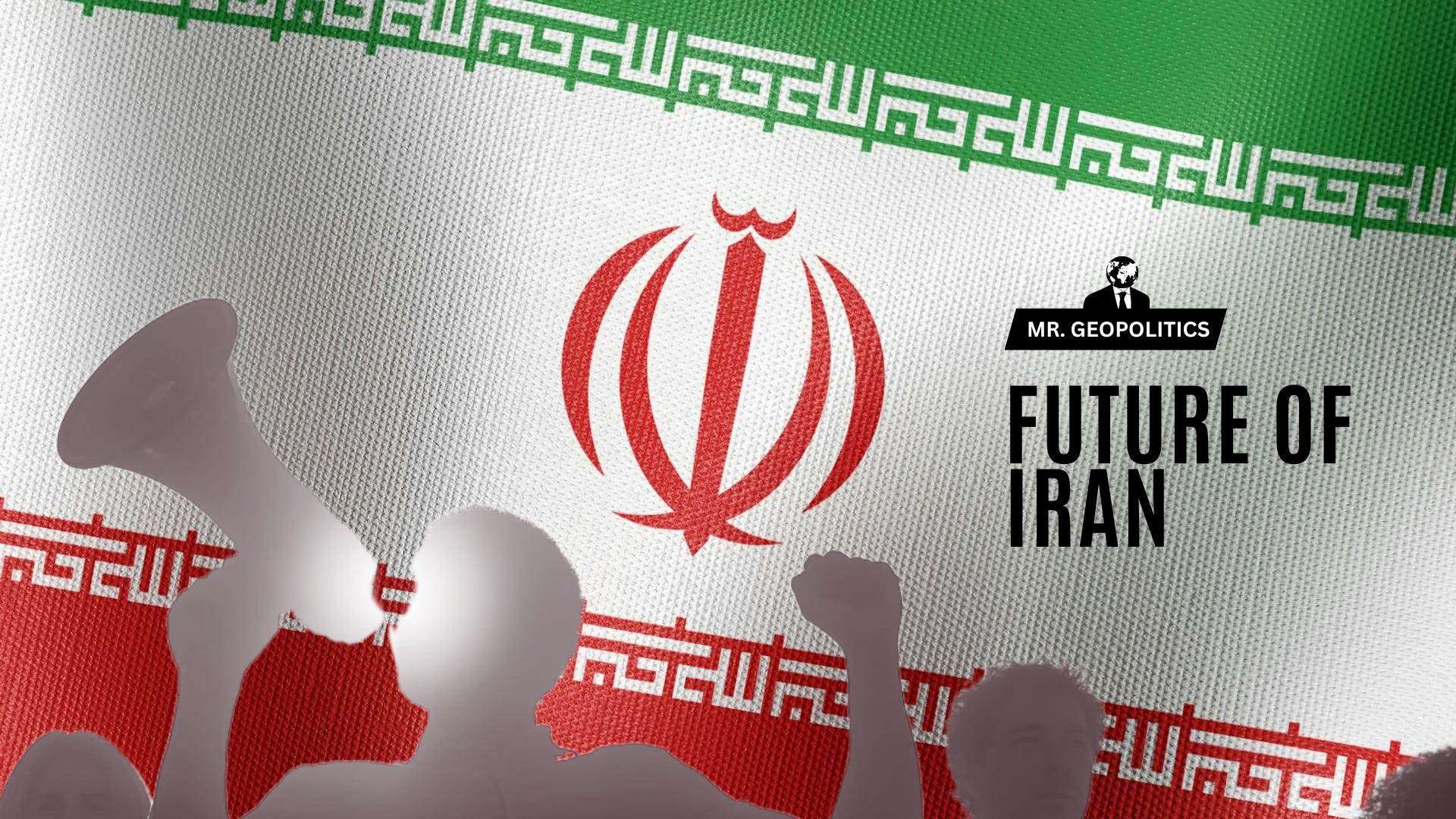
As US President Donald Trump signals action, telling protestors (or patriots) in Iran that “help is on the way,” a fresh conflict is brewing between Tehran and Washington-Tel Aviv. This is a tense moment, to put it mildly. The most dangerous animal is one that is cornered, and that is exactly where the Iranian regime stands today. Its proxies are being dismantled, its alliances are wobbling, its society and economy are in turmoil. This is not “another flare-up.” This is survival.

Nuclear cards are on the table, from Iran shutting down the Strait of Hormuz, where around 20% of the world’s oil transits, to the IRGC activating underground missile bases, which, according to Iranian officials, number in the hundreds, loaded with ballistic and hypersonic missiles, likely aimed at Israel. Unlike in June 2025, when the 12-day war erupted, a bulk of America’s operational naval assets are in the Caribbean, with not a single US aircraft carrier in the Middle East. This creates serious gaps in the US ability to defend Israel or its Arab allies, including Qatar, with which America signed a mutual defense deal last year. Add to this, US supplies of the crucial “interceptor missiles” are running low. During the Israel-Iran war, the US used up 25% of its THAAD missiles.
As the protests enter their third week, the drums of revolution are banging louder than ever. There are dozens of shockwaves if the Iranian regime collapses, and as some reports suggest, the Ayatollah and his inner circle flee to Moscow.
The top five are below.
New oil war: If the current regime is overthrown and a pro-US leader is appointed, American sanctions on Iranian oil could disappear, just as they are being reversed on Venezuela. This would create a “dual-rush” as both Iranian and Venezuelan oil enter global markets (unless the US keeps the Venezuelan oil for itself). In the short term, this would create an overflow of oil, causing prices to drop. The US, India, China, Europe, and much of the Global South would welcome cheaper oil. Except, major producers like Saudi Arabia and Russia, along with OPEC, who are already locked in a competition to gain oil market share, may not want prices to fall too much. A new showdown may emerge, on the back of Iranian oil, between surplus supply and curbs in production (led by Riyadh, Moscow, and others). This would represent an oil war, not just between buyers and sellers, but between producers themselves. Oil markets are already at risk of fragmentation after Maduro’s capture. Add in an “Iranian card,” and volatility could spike.
Internal strife: There is no real clarity on who would become the new leader of Iran. Does the country revert back to a monarchy as Reza Pahlavi, son of the ousted Shah, takes the reins? Will the US press for democratic elections? Depending on who leads the nation, Iran could constantly find itself teetering on civil war. This is not just about pro-Ayatollah sects clashing with pro-revolution sects, or clashes between different parts of the religious community. This is also about the next Iranian domestic and global outlook. A future Iranian leader will have to design a new Iranian blueprint. Will there be a detente with Israel? Could Iran integrate into the Arab world? Will women have the same rights as men? Any of these moves may anger parts of the population. The next leader will have to play a tricky balancing act to ensure “new ideas” do not inflict old wounds. Maintaining a civil society and avoiding internal strife remains the biggest challenge if the regime collapses.
A BRICS squeeze: A revolution in Iran would be felt across the world’s most infamous bloc: BRICS. So far, the group has stood on the sidelines, first in June, and now in January, as one of its members destabilizes. This does not bode well for optics. Even with the state of the West today, it is hard to imagine the G7 simply observing a key member being attacked by another nation. If a revolution sweeps through Iran, the Iranian seat at the BRICS table might disappear. The next government could reject BRICS membership, similar to what Argentina did after the election of Javier Milei. This would not just shrink BRICS. It would also be a signal to current and future members that BRICS states are simply about open dialogue, not alliance or unity. Connected to this is Russia and drones. A few years ago, Russia was completely reliant on Iran for the supply of drones. But today, Russia has localized the production of Iranian drones, like the plant in Yelabuga, located close to Kazakhstan (far from the fighting), which is mass-producing certain models of Shahed, or what Russia calls “Geran-2.” By some estimates, Russia’s production could enable it to launch 2,000 drones in a single night, versus the past, when it launched 2,000 drones in an entire month. The problem for Russia is the pipeline of designs and innovation. If Iran’s drone sector gets sidelined by revolution, Russia will not have access to critical R&D. This forces Russia to depend even more on China, eating into Russian autonomy.
American pullback: Should the Iran threat disappear through revolution, the US may shift its new national security into overdrive. One of the main reasons for America’s massive military presence in the Middle East has been Tehran. If this threat is gone, the US could pullback, moving assets permanently out of the region (and into the Western Hemisphere). This would force Arab nations to bolster their own sovereign capabilities as the US geostrategy changes. None of this is likely to take place in the short-term, especially considering the close ties between Washington and Riyadh, Abu Dhabi, and Doha. But if Iran stabilizes, then over the next decade, a growing number in the US may question why the nation has such a large expenditure for a region that is no longer functioning the way it once was.
Counter-world order wobbles: The last but definitely not the least is the state of the Sino-Russian alliance, the counter-world order that many have feared will rival or replace the US-led design. Over the past decade, for certain brief moments, the Sino-Russian alliance appeared unstoppable. Yet, in the span of one week in 2026, the alliance is contracting. Venezuela has been turned upside down. A revolution in Iran may be on the horizon. Central Asia is exploring a new chapter with the US, Hungary is seeking an American “financial shield,” and America’s moves from Africa to Asia, particularly around critical metals and geoeconomics (i.e., the US-Malaysia trade deal), are tilting the scales in Washington’s favor. Besides North Korea, and potentially Pakistan, the counter-world order is once again just about two nations: Russia and China. Both Beijing and Moscow are staring at a world in flux, which once benefited their desires, but is now halting their progress. If the Iranian regime falls, yet another domino state exits the Sino-Russian corner. Adding to this, China faces serious disruption. The next Iranian government may not honor Chinese investments or contracts, including the $400 billion Beijing committed in 2021. The Chinese access to Iran could be severed.
There are many, many more shockwaves of a revolution in Iran. Alongside the above five, the state of play in Gaza, Lebanon, and Yemen could permanently change as Tehran no longer funds its proxies. Of course, this creates a separate headache, where Turkey may step in to fund groups like Hamas in order to hit Israel.
In addition to all that, what happens to Iranian talent across the globe, often highly educated and skilled. Will some return home to rebuild the nation? While not purely geopolitical, Western nations are competing for talent and innovation. A revolution in Iran, however, and the pull of new geopolitical horizons, must cause some Iranian talent to temporarily or permanently relocate back home.
The stakes have never been greater for Iran, its people, and the government. Everybody is battering down. The warning signs of war are building. If the revolution does succeed, it will not just affect Iran, but the whole world, and in ways that go well beyond the obvious and expected.
The new Iran will also mean a new world.
-Abishur Prakash aka “Mr. Geopolitics”

Mr. Geopolitics is the property of Abishur Prakash/The Geopolitical Business, Inc., and is protected under Canadian Copyright Law. This includes, but is not limited to: ideas, perspectives, expressions, concepts, etc. Any use of the insights, including sharing or interpretation, partly or wholly, requires explicit written permission.