

The Scariest Place On Earth Right Now: Taiwan
Why the island nation should be more fearful than ever before

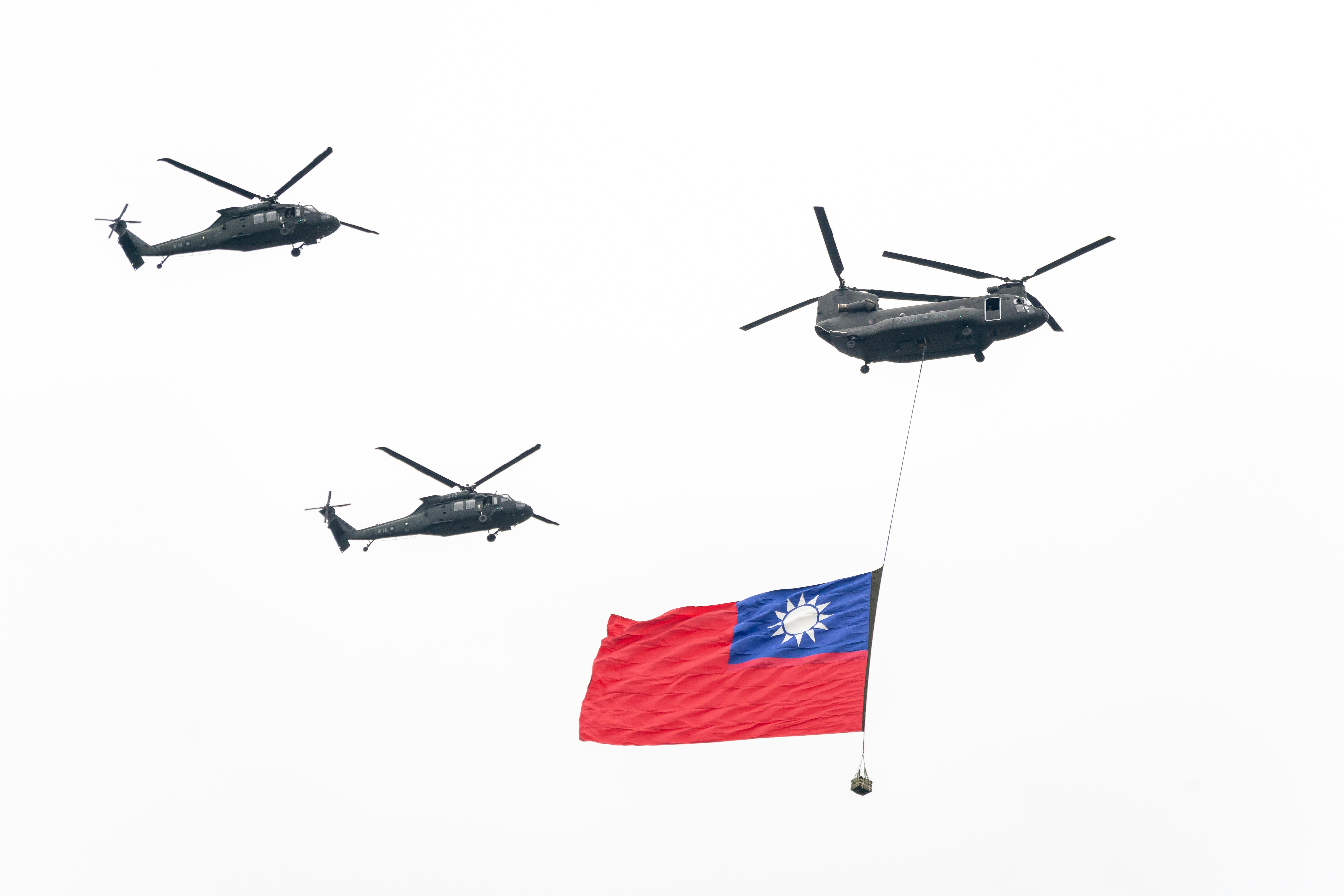
The world is in flux. The rules and order are gone. Obligations are in the air. This is leading to a new vulnerability. In Europe, NATO is worried that Russia may launch a new offensive. In the Middle East, fears are growing that the US (and Israel) could strike the Iranian regime, which is at its weakest point since 1979.
However, the most vulnerable nation is not in Europe or the Middle East. It is in Asia.
The nation that should be most fearful of the current geopolitical climate is Taiwan.
Reality vs. Paper
On paper, Taiwan should feel more secure.
The Japanese Prime Minister Sanae Takaichi has risked China’s wrath and warned that Tokyo may intervene in a Chinese invasion of the island. She has further warned that if Japan simply stood on the sidelines, the US-Japan alliance might fall apart. Meanwhile, even in an era when geopolitics trumps economics, the Chinese economy is facing serious headwinds as signaled in the banking sector, where China Merchants Bank, one of the few Chinese banks not headquartered in Beijing, posted a 0.01% growth in operating income for 2025, effectively no growth.
These shifts give Taiwan more “security.” One nation is doubling down on its commitments to Taipei. One adversary is facing a new economic storm, making expensive geopolitics unlikely (i.e., an invasion of Taiwan).
American Uncertainty
However, all of this is quickly neutralized by uncertainty about America, hinging on two key headaches, which together make Taiwan the most vulnerable nation in the world.
First, US President Donald Trump is increasingly prioritizing economics over hard geopolitics. One of the initially proposed frameworks to end the war in Ukraine hinged on America gaining vast control of Ukrainian ports, resources, infrastructure, and rebuilding contracts. And in Africa, the deal to diffuse the more than thirty-year DRC-Rwanda conflict hinges on America accessing critical metals reserves. This is, of course, a paradox. The US is prioritizing economics over geopolitics at a moment when geopolitics is trumping economics everywhere else, in large part, because of America’s own actions! With the economic lens on, a new question forms for Taiwan. If China invades, would the US place more weight on the US economy than the sovereignty and defense of Taiwan?
Second, there is absolutely no guarantee that America will stand by its security guarantees with its closest allies, from Europe to Japan, let alone Taiwan. Should a NATO member invoke Article 5, there is growing doubt as to whether America will show up or will tell NATO to stand down. It is the same in Asia. The ongoing geoeconomic fight between China and Japan is quite telling of how “involved” America may become. Even as China bans the export of dual-use items to Japan, including rare earths, a nuclear move that could paralyze parts of the Japanese economy, the US has stayed in the shadows, avoiding a direct collision with Beijing. As it stands right now, there are only two nations that can be assured America will show up if war begins: Israel and Qatar. As for Taiwan, it is more isolated and alone than ever before. For the first time since the passing of the Taiwan Relations Act in 1979, Taiwan cannot rely on America to show up if China invades.
In such an environment, if one measures which nations are most vulnerable to invasion, Taiwan would rank the highest. From this vantage point, this makes Taiwan the scariest place on Earth right now.
The question in front of Taiwan is how it offsets America’s unpredictability. And, alongside that, strange remarks, like the US Treasury Secretary, Scott Bessent, calling Taiwan’s chip leadership the biggest threat to the global economy. Really? And how exactly should the constant see-saw of tariffs be viewed then?
Taiwan’s Gambit
Taiwan is in a race against time. To a certain degree, there is not much it can do without America. Turning to Japan has limits. Nations like India or South Korea are far from ready to fully commit. The shadow of China is reinforced by Russia becoming Asian and North Korean troops in Ukraine, presenting a “triple threat” to Taiwan (a Sino-Russian-North Korean axis).
The task in front of Taipei is to figure out how to convince America to return to its old footing. To guarantee, as much as is possible, that if China invades, America will show up even if its economy tanks. And here, Taiwan has one card to play: semiconductors. Taiwan must wield its chip power in new ways, going beyond simply manufacturing in the US or foreign investment. This may not be enough to keep America close.
To fend off Chinese hard power, Taiwan will have to rely on technology like never before. Without ingenuity, Taiwan is more exposed and insecure than ever before.
-Abishur Prakash aka “Mr. Geopolitics”

Mr. Geopolitics is the property of Abishur Prakash/The Geopolitical Business, Inc., and is protected under Canadian Copyright Law. This includes, but is not limited to: ideas, perspectives, expressions, concepts, etc. Any use of the insights, including sharing or interpretation, partly or wholly, requires explicit written permission.