

The End of the War Is The Start of the War
Washington's new plan to beat Iran

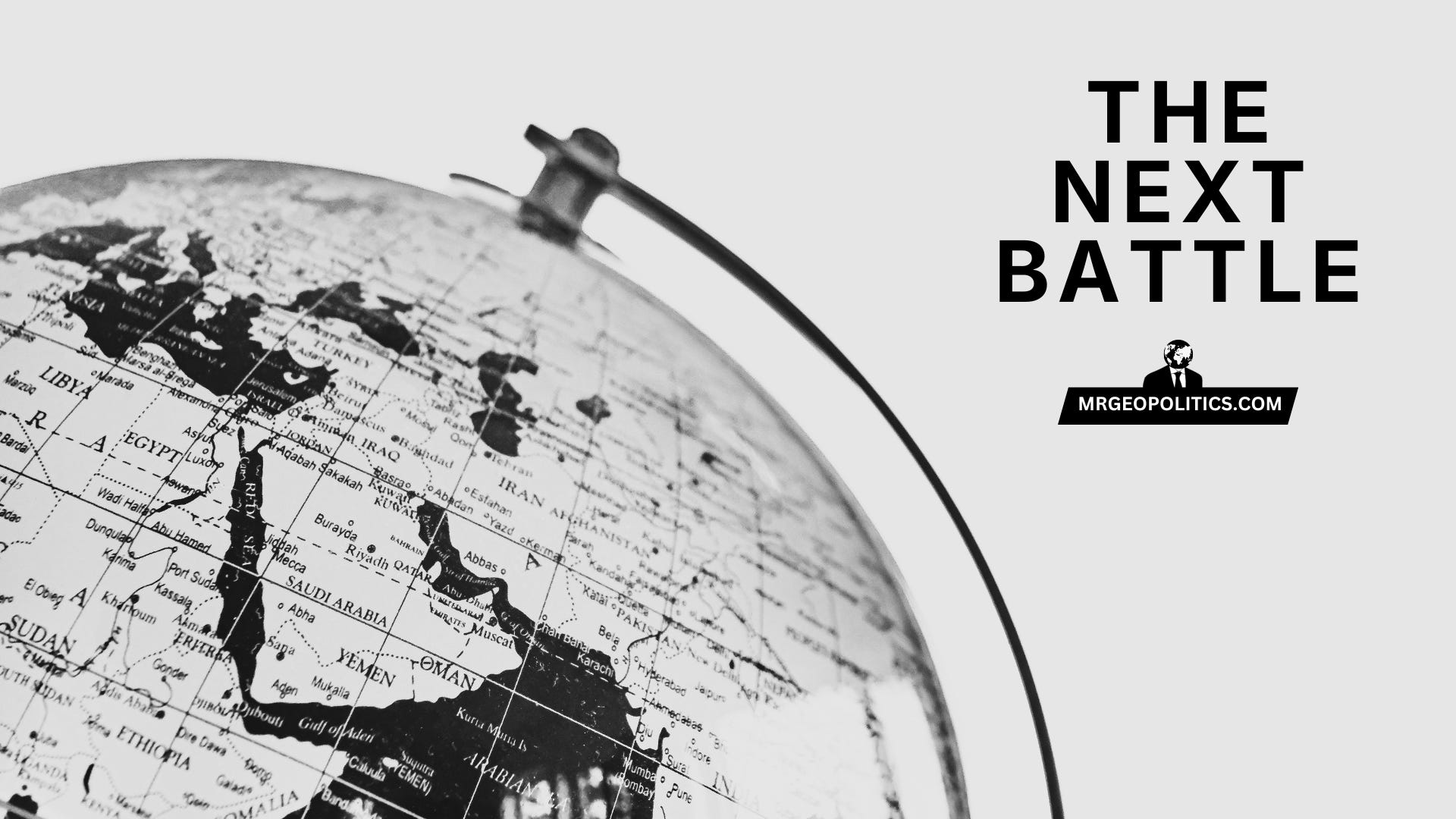
In the last 48 hours, talk of a deal to end the war has been spreading. First, it was US President Donald Trump signaling discussions with Tehran. Then, it was an Iranian proposal, based on discussions with Oman, that would see Iran gaining total control of outbound traffic through the Strait of Hormuz, and the power to ban US and Israeli vessels. Now, it is US Treasury Secretary Scott Bessent saying that Hormuz could be open “today” or “tomorrow” under a new ceasefire deal.
This last part is the most significant. Because, this was not all Bessent said. Continuing his remarks, he also dropped perhaps the biggest hint of the geopolitics that is about to commence the moment the war ends (or freezes), when he said that he believes within two-years the Strait of Hormuz will not matter much (read: irrelevant), as up to 70% of energy that currently transits the chokepoint will be transported via underground pipelines.
This is a huge window into American geostrategy, particularly Trump’s next moves over the next 24 months - coinciding with the end of his second-term.

Whether or not the current administration will admit it, the US-Iran war has been a complete disaster for America. There has been no regime change, no de-nuclearization, no uprising by the people, and no isolation of Iran on the world stage. Remember that brief ceasefire that reopened the Strait a few weeks ago? Iran shipped China $6 billion of oil during that small window - completely sidelining the US push to remove Iranian energy from global markets. Put simply, the US has not been able to defeat Iran on the battlefield. Even Iran’s leadership has shifted, from an Ayatollah-led regime to one where IRGC hardliners increasingly call the shots. As it stands right now, it is unclear how Washington changes the status quo - from Iran proper to the Strait of Hormuz.
This is forcing the US to switch gears. If Iran cannot be defeated militarily, the war will move to the economic theatre, beyond sanctions and oil isolation.
What Bessent said, without saying it, is that the US is going to try and redesign the energy matrix of the Middle East.
Instead of shipping oil through Gulf ports located in or near the Strait of Hormuz, the US and its Gulf allies will attempt to build a different kind of infrastructure that is out of Iran’s grip. Yes, this is not entirely new. Saudi Arabia has the East-West pipeline, which can pump 7 million barrels of oil per day. However, Saudi Arabia’s pipeline still brings oil into the Red Sea, which remains unstable. Then there is the UAE’s Habshan–Fujairah, which moves oil beyond the Strait of Hormuz, into the Gulf of Oman. However, while this frees Emirati oil from the physical chokepoint, it still exposes Emirati oil to Iranian drone and missile strikes.

This leaves only two options.
First, energy is routed through pipelines that traverse the recently unsanctioned Syria, and move through Turkish ports. Except, this only helps Europe, which purchases less than 10% of Middle Eastern energy. The large bulk of Middle Eastern energy exports, almost 90%, flow to Asia. This leads to the second option where energy is routed through pipelines that end in Oman’s Indian Ocean facing coast, completely bypassing the Strait of Hormuz. The potential third option, which remains highly unlikely at this moment, is that the situation in Yemen changes drastically, driven by a potential Saudi ground offensive, opening up more geography for the US energy rewiring push.
Whether or not the US can achieve this remains unknown. There are so many moving parts, not to mention, the recently inked Turkey-Pakistan-Saudi Arabia mutual defense treaty, likely to underpin a new kind of economic bloc in West Asia. Then, of course, is whether Saudi Arabia, the UAE, Kuwait, Qatar, and others, will be comfortable losing their sovereign ability to export energy from their territory.
But, the big uncertainty is with Iran. The US is seeking an off-ramp from this war (coinciding with the new energy project). However, Iran’s position is growing more radical by the day. Instead of ending this conflict, Iran seems determined to raise the heat and introduce a new status quo, moves that make talk of ceasefire challenging. And then there is the situation in Lebanon, deeply linked to the Iran conflict, where Israel has resumed strikes on Hezbollah, and which Tehran previously warned would jeopardize talks with the US.
Put simply: there are still “ways” to go before an actual end of the war occurs. Iran is not going to give up control of the Strait of Hormuz. America is not going to give Iran control of the Strait of Hormuz.
But in this, a different kind of geopolitics is appearing. The US is determined to change geography. If the military fight cannot be won, the regional lines of the Middle East will be redrawn. And in this, America itself faces its biggest test. Who will follow Washington towards this new energy design? And who will view this moment as a chance to introduce their own model?
Have questions or ideas? Let’s talk: abishur at mrgeopolitics dot com
Mr. Geopolitics is the property of Abishur Prakash/The Geopolitical Business, Inc., and is protected under Canadian Copyright Law. This includes, but is not limited to: ideas, perspectives, expressions, concepts, etc. Any use of the insights, including sharing or interpretation, partly or wholly, requires explicit written permission.