

A New Saudi Arabia-Pakistan Axis Redraws Eurasia
An old relationship evolves into a new bloc

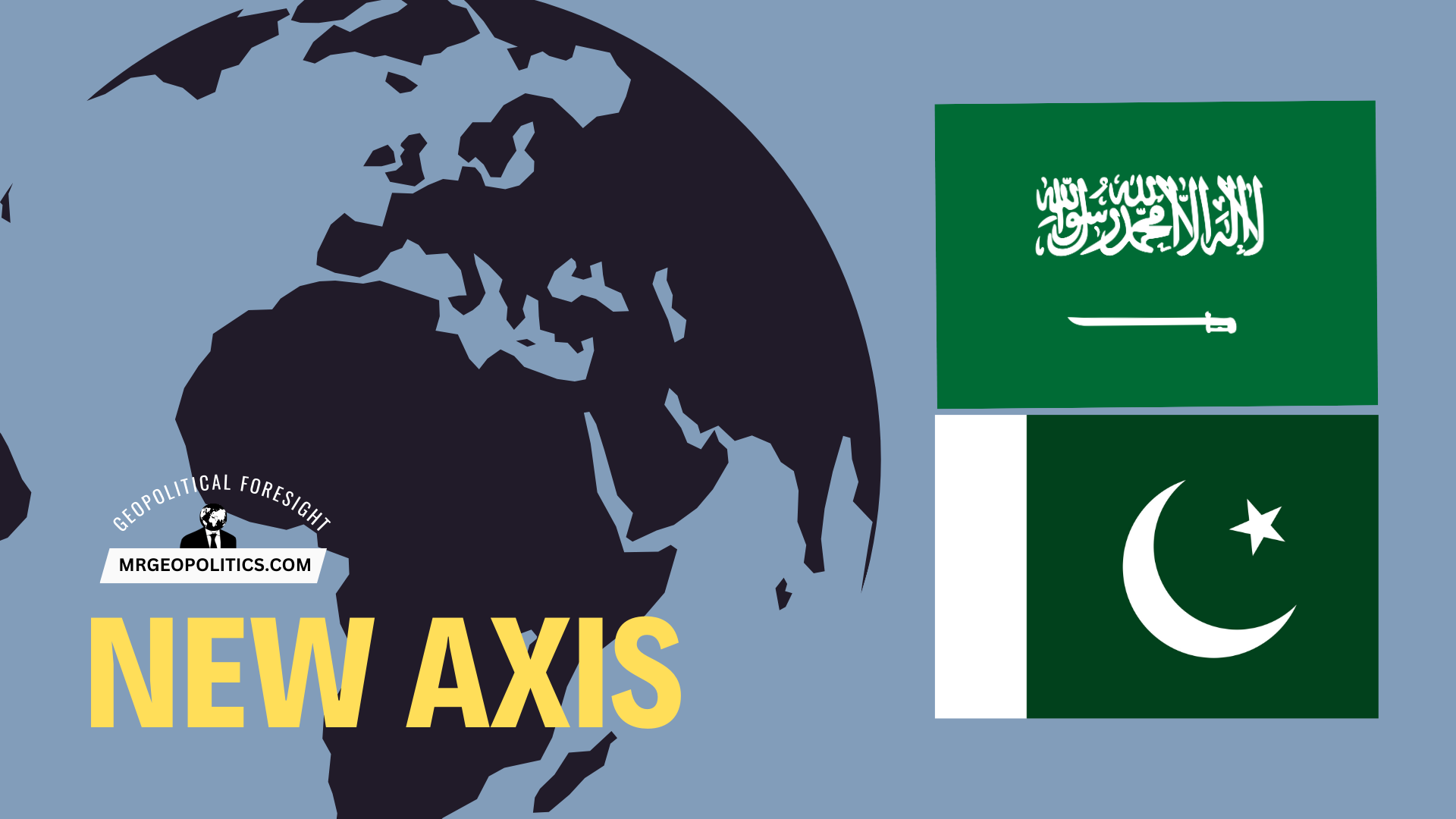
With the spotlight on Venezuela and Iran, a key geopolitical relationship has entered a higher gear: Saudi Arabia-Pakistan. The relationship between the two nations has been wavy. While initially close after Pakistan’s independence from British rule in 1947, and throughout the Cold War, it began to wane as India’s economic and cultural rise eclipsed Pakistan’s Islamic identity and outlook. Pakistan was cornered by terrorism and political instability, and Arab states reoriented themselves around Delhi. In 2019, Saudi Arabian Crown Prince Mohammed bin Salman infamously referred to Indian Prime Minister Narendra Modi as his “older brother.”
Except, the situation has dramatically changed since the brief India-Pakistan war in May 2025, when India’s armed forces struggled against Pakistan, largely equipped with Chinese weapons. The pushback on India cascaded throughout Asia. In Southeast Asia, for example, Indonesia said it was pursuing the J-10 fighter jet (China), also employed by Pakistan against Indian forces.

A few months after this war, however, something unexpected happened.
In September 2025, Saudi Arabia and Pakistan inked a mutual defense treaty, under which aggression against one nation will be treated as aggression against both. Few, if any, predicted this. It marked the return of mutual defense treaties, popularized by America’s commitments to NATO, Japan, South Korea, and the Philippines.
The agreement further put geopolitics in flux. Would Saudi Arabia come to Pakistan’s aid in a future war with India? Would India continue buying oil from Saudi Arabia? Then, a flare-up between Pakistan and Afghanistan revealed the limits of the strategic agreement. There was clear discretion.
However, what began as a mutual defense agreement, or a rapprochement between Riyadh and Islamabad, has suddenly snowballed into something much bigger: a new geopolitical axis that could redraw Eurasia.
Days after the raid on Nicolas Maduro in Caracas, some international headlines reported a rather “minor” deal (in comparison to the capture of the Venezuelan leader).
It would see Pakistan supply $1.5 billion worth of weapons, including drones and fighter jets, to the Sudanese army in the embattled African nation. And where is Sudan getting the funds from? Saudi Arabia. The Saudis have brokered a deal to supply Sudan’s army with weapons to battle the Rapid Support Forces, who are backed by the UAE. One geopolitics (Saudi-Pakistan) is overlapping with another geopolitics (Riyadh vs. Abu Dhabi).
Except, almost simultaneously, alongside the Saudi-brokered Pakistan-Sudan deal, Turkey announced it was interested in joining the Saudi-Pakistan mutual defense treaty. This stunning geopolitical decision means a mini-NATO of sorts may be on the horizon, led by Middle Eastern and South Asian nations. At a moment when the Middle East remains in the grey, from Iran to Yemen to Lebanon to Gaza, Turkey appears to be seeking deeper integration with Islamic nations, once again bringing religion to the foray of geopolitics.
A new axis is forming, led by Saudi Arabia and Pakistan, that is far bigger than mutual defense. It is introducing a new setup for their respective regions. And, Turkey may not be the last aspirant. In Sudan, the government, backed by Saudi Arabia, has almost cleared a deal to give Russia a base on the Red Sea. Will Russia deepen its links with Islamabad or stand by Delhi? And China could join the Saudi-Pakistan axis, seeking to inject its new military equipment across the developing world. In fact, China is already part of the equation, as Pakistan’s defense minister warns that it may not need any more IMF assistance as interest in a Pakistani-produced JF-17 Thunder jet (China) explodes, from Bangladesh to Azerbaijan. Think about that for a moment. The India-Pakistan war has changed Pakistan’s optics so significantly that it may be able to stop taking on debt from the IMF.
There are, as always, more questions than answers.
Clearly, India’s rise is far different than China’s. At least, for the better part of China’s economic experiment, starting in the 1980s, the world functioned a certain way. There was little impeding China’s growth. Yet, for India, at the beginning of its own economic growth story, the world is in flux. It is America First at one moment, Russia-Ukraine at another, and new curveballs, like Saudi Arabia-Pakistan-Turkey at another. Will India move closer to the UAE as Saudi Arabia aligns itself with India’s most strategic competitors/adversaries?
Equally important is how this new axis complements or clashes with America. So far, it has been pure bromance between Washington, Islamabad, and Riyadh. But, with another Israel-Iran war looming, the US relationship with Israel could put it at odds with the new axis. And in the background of all this is how this new axis may increasingly control the flow of critical energy and goods (i.e., Saudi oil exports, Turkish ports).
Most attention is placed on the “usual relationships” like US-China, or US-EU, or Japan-China. But, in the current climate, the most unsuspecting relationships can induce the most significant change. What is taking place between Saudi Arabia and Pakistan is a sign of that. These two nations have opened the door to a new alignment. Now, across Eurasia, everybody else may have to shuffle and adapt.
-Abishur Prakash aka “Mr. Geopolitics”

Mr. Geopolitics is the property of Abishur Prakash/The Geopolitical Business, Inc., and is protected under Canadian Copyright Law. This includes, but is not limited to: ideas, perspectives, expressions, concepts, etc. Any use of the insights, including sharing or interpretation, partly or wholly, requires explicit written permission.